Let us know how we can help
Sales & Pricing
Speak to a rep about your business needs

Help & Support
See our product support options
General inquiries and locations
Contact us


 Control-M + Azure Data Factory
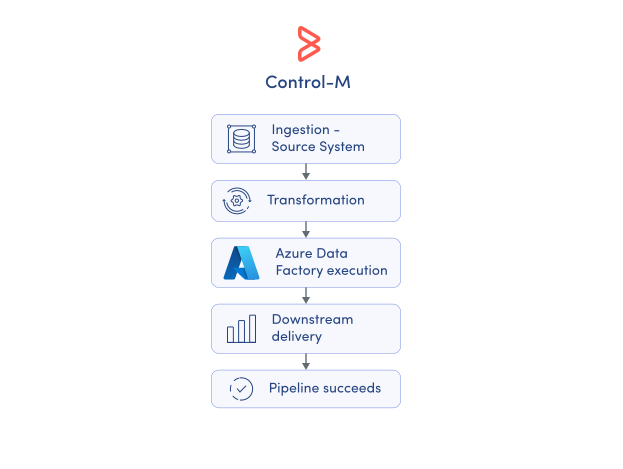
Your Azure Data Factory workflow starts before a pipeline run ever triggers its data-driven execution — and it can fail when something upstream breaks. An Azure Blob Storage container never receives its upstream file before the pipeline's source dataset resolves its linked service path. An Azure Databricks notebook job overruns its cluster startup timeout before writing its transformed output to the pipeline's staging container. Control-M orchestrates the full chain: Azure Blob Storage ingestion, Azure Databricks transformation, Azure Data Factory execution, and Azure Synapse delivery.
common workflow issues
Does this sound like your week?
These aren’t edge cases. They’re the normal operating conditions for teams running Azure Data Factory across multiple tools. Here’s how Control‑M handles each one.
UPSTREAM DELAYS
Your Azure Data Factory pipeline waited. The source files never arrived.
Azure Data Factory can't process data that isn't there. Control-M monitors file arrivals, storage events, APIs, and upstream application jobs before triggering the pipeline. Missing dependencies pause execution automatically instead of producing failed or incomplete data loads.
PIPELINE FAILURES
Copy Activity failed midway. Downstream transformations still tried to run.
Control-M detects Azure Data Factory pipeline exit states, prevents downstream execution after failures, applies configurable retries where appropriate, and automatically resumes dependent workflows only after successful completion, eliminating cascading failures across your data platform.
CROSS-PLATFORM FLOWS
Azure Data Factory finished. Databricks and Synapse never started.
Data platforms rarely end with Azure Data Factory. Control-M orchestrates dependencies across Databricks, Azure Synapse Analytics, Snowflake, SQL databases, APIs, and file transfers so every downstream workload starts only when prerequisites are satisfied.
SLA PRESSURE
The morning dashboard missed its deadline. Nobody knew until users complained.
Control-M continuously tracks workflow progress against SLA targets, predicts potential breaches before they happen, and alerts operators through integrated notification channels so teams can intervene before business reporting is affected.
HYBRID ORCHESTRATION
Half the workflow runs on-premises. The rest runs in Azure.
Control-M orchestrates Azure Data Factory alongside on-premises databases, enterprise applications, managed file transfers, cloud services, and legacy schedulers within a single workflow, providing unified dependency management, monitoring, and recovery across hybrid environments.
INTEGRATION FACTS
Control‑M + Azure Data Factory
|
workload.types |
Pipeline execution · Trigger-based pipelines · Data movement · ETL/ELT orchestration · Batch processing · Metadata-driven pipelines |
|
trigger.type |
Schedule trigger · Event trigger · Azure Blob Storage event · REST API/webhook · Upstream job completion · File arrival · Manual trigger |
|
cross_tool.deps |
Azure Databricks job · Azure Synapse Analytics · Azure SQL Database · Azure Functions · Azure Logic Apps · REST API call · Managed File Transfer · Power BI dataset refresh |
|
cloud.platforms |
Microsoft Azure · AWS · Google Cloud Platform · hybrid cloud · on-premises systems |
|
error_handling |
configurable retry count · retry interval · pipeline status monitoring · downstream dependency prevention · automated job hold · SLA breach prediction · PagerDuty · Slack |
|
throughput |
large-scale batch processing · high-volume data ingestion · metadata-driven orchestration · scalable pipeline execution · hybrid data movement |
|
observability |
job-level audit log · end-to-end workflow visibility · dependency lineage graph · SLA tracking and prevention · centralized montioring · Datadog integration · Splunk integration · SIEM-compatible event stream |
end-to-end orchestration
One production workflow. Every tool in the stack.
Control-M orchestrates workflows across Azure Data Factory, Databricks, Azure Synapse, Snowflake, file transfers, and cloud services in a single job flow — with dependency tracking, SLA visibility, and automated recovery across all of them.
- Cross-tool dependency: Azure Blob Storage → Azure Data Factory → Databricks → Snowflake → Power BI
- Data-aware triggers: file arrival, Event Grid event, pipeline completion, API response
|
Azure Data Factory |
pipeline execution · status monitoring · dependency orchestration · automated recovery |
|
Azure Databricks |
job triggering · completion tracking · SLA monitoring |
|
Azure Synapse Analytics |
query execution · dependency coordination · workload sequencing |
|
Snowflake |
data load orchestration · downstream triggering · status tracking |
|
Azure Blob Storage |
file arrival detection · validation · event-based triggering |
|
Power BI |
dataset refresh · report delivery · completion verification |
|
REST APIs |
event integration · workflow triggering · status retrieval |
airflow coexistance
Control-M doesn’t replace your Airflow DAGs. It runs the layer above them.
The objection is common: “We’re already on Airflow.” The issue isn’t what Airflow does – it’s what happens before and after Airflow runs. That’s where pipelines actually fail.
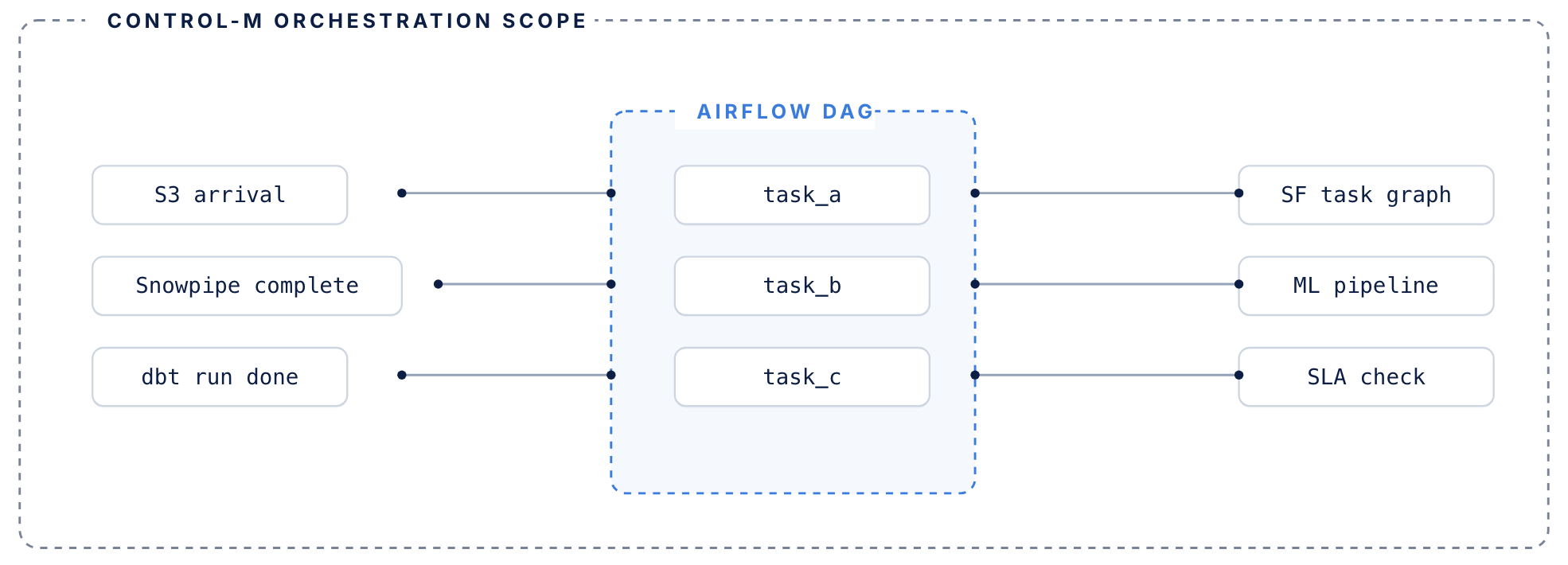
Airflow manages its DAG. Control-M manages everything surrounding it.
AIRFLOW HANDLES
DAG-level orchestration inside the data pipeline
- DAG-level task orchestration within data pipelines
- Python operators, sensors, and task dependencies
- Execution graph for jobs that run inside your pipeline
- Manages retries within a single DAG context
control-m adds
The coordination layer around your DAGs
- Coordination layer around DAGs — triggers Airflow based on upstream conditions: file arrivals, API events, other tool completions
- Tracks each DAG’s SLA contribution across the full end-to-end workflow, not just its own routine
- Manages failure recovery when upstream dependencies fail before Airflow even starts
- Existing DAGs don’t need to be rewritten or migrated
MONITOR PIPELINES
Monitor Azure Data Factory workflows in one place
Azure Data Factory provides execution visibility inside its environment, but modern pipelines span many platforms. Control-M delivers a centralized operational view across the entire workflow, helping teams manage execution, dependencies, and delivery commitments from a single console:
-
Pipeline execution status
-
Runtime history tracking
-
Upstream dependency visibility
-
Downstream dependency mapping
-
SLA risk indicators
SLA ASSURANCE
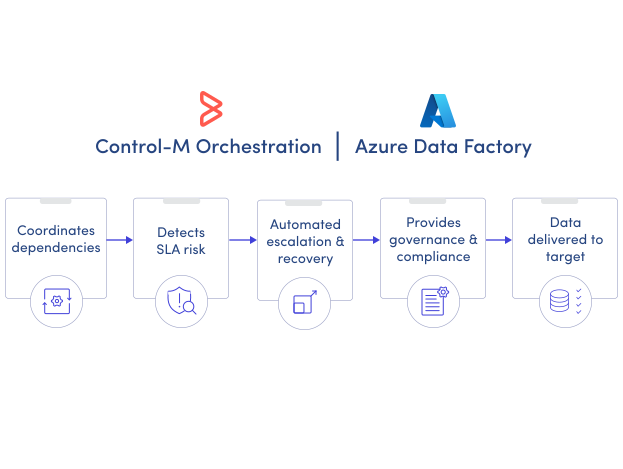
Keep Azure Data Factory deliveries on schedule
Native scheduling does not provide business-level SLA management across the full workflow. Control-M continuously monitors dependencies, predicts delays, and automates remediation before missed deadlines impact reporting, analytics, or customer-facing processes:
-
SLA breach prediction
-
Automated escalation workflows
-
Dependency-aware scheduling
-
Configurable recovery actions
-
Business service visibility
Documentation
Bring order to complex workflows
Learn how Control-M helps teams orchestrate complex processes with greater visibility, coordination, and control.
