Let us know how we can help
Sales & Pricing
Speak to a rep about your business needs

Help & Support
See our product support options
General inquiries and locations
Contact us



BMC AMI DevX
Empower next-gen developers with a mainframe-inclusive DevOps toolchain that accelerates innovation and resiliency.
Learn more
BMC AMI DevX Code Pipeline
Automate mainframe CI/CD with BMC AMI DevX Code Pipeline. Integrate Git with z/OS, streamline builds and deployments, and govern AI-assisted delivery.
Learn more
BMC AMI DevX Workbench
Bring mainframe development into VS Code with BMC AMI DevX Workbench. GenAI code explanations, Git workflows, and modern tooling to onboard faster and boost productivity.
Learn more
Executive summary
Finanz Informatik (FI) runs one of the largest banking data centers in Europe, supporting roughly half of Germany's retail bank activities. To attract new talent and sustain its innovation edge, FI transformed a mainframe development environment without alienating senior developers. Working with BMC Professional Services and BMC AMI DevX, FI completed a complex migration on time and on budget—going live in just 18 months. The result: a more than 30% rise in application deployments, a modern environment for roughly 1,500 developers, and significant cost savings over five years.
| Metric | Result |
|---|---|
|
Deployment increase |
More than 30% rise in annual application deployments |
|
Go-live timeline |
18 months—on time and on budget |
|
Cost savings |
Significant savings over five years, driven by lower licensing costs |
Introduction
Finanz Informatik GmbH & CO. KG is the IT engine behind the Savings Banks Financial Group, one of Europe's largest financial networks. FI provides applications and data center infrastructure for around 50 million end customers, supporting approximately 340 savings banks, 112 million accounts, and 205 billion transactions. Alongside retail banks, FI and its subsidiaries also serve state banks, building societies, public insurers and related businesses.
A central component of FI’s IT solution is the high‑performance core banking system, which is complemented by a multitude of applications covering the banking business. The core banking system runs mainly on mainframe, while the additional applications operate on other platforms and modern technologies as well as advanced programming languages.
FI's mainframe is the foundation everything else depends on. It powers the core banking architecture used across the entire group—processing hundreds of thousands of modules that keep every transaction, transfer, and service running reliably, around the clock.
"It covers everything that makes a bank, a bank—think trading, transfers, transactions, lines of credit," explains Frank Henkes, Director of Processes, Services and Administration at FI. "All the front ends and mobile apps that these banks provide to tellers and end customers, it's always working through our back end—done by over 400,000 modules running on our mainframe."
For FI, the mainframe isn't legacy baggage. It's a strategic asset. As one of the largest multi-client service providers in European banking, FI depends on the platform's extreme reliability, its ability to securely process mass transactions, and its near-100% availability. Combined with modern approaches like agentic AI, this foundation lets banks deliver current, customer-facing solutions with minimal disruption.
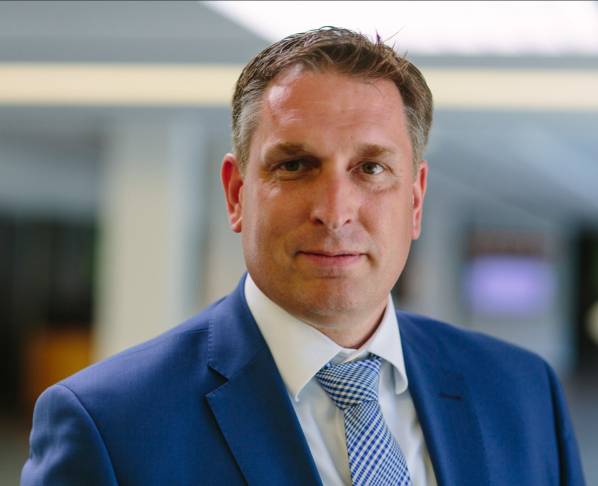
[FI’s mainframe] covers everything that makes a bank, a bank—think trading, transfers, transactions, lines of credit. All the front ends and mobile apps that these banks provide to tellers and end customers, it's always working through our back end—done by over 400,000 modules running on our mainframe.
The challenge
FI faced a challenge shared across the mainframe world: demographic change and a development environment that new talent didn't want to touch.
To interface with the mainframe and its underlying code, FI relied on 3,270 green screens through a legacy source code management (SCM) solution. That tool had been in place for nearly three decades. Over the years, it had been extended and tweaked repeatedly, accumulating custom processes that were increasingly difficult to maintain. Just as important, younger developers gravitated toward agile and parallel development environments—not green screens.
The timing made the issue urgent. FI expected roughly one-third of its workforce to retire within five years. Without a modern environment, the company risked losing decades of institutional knowledge and struggling to recruit the next generation of developers.
"We've always been an innovator in our space," says Henkes. "We knew, to maintain our ability to innovate and attract new talent, it was time for a major change."
The solution
FI chose BMC for two reasons: the product and the partnership.
The team recognized BMC's ongoing investment in the BMC AMI DevX platform, which offered a future-ready foundation with continuous enhancements, including emerging AI-driven capabilities. Equally important was strategic fit. When FI evaluated BMC AMI DevX Code Pipeline, it looked beyond current features to BMC's product roadmap. The key capabilities FI needed for its future business matched BMC's plans to enhance the platform. That alignment gave FI confidence it could build its own long-term strategy on the collaboration.
The business case reinforced the decision. BMC AMI DevX Code Pipeline carried lower licensing costs than FI's previous solution, and BMC assembled a small team of experienced experts to guide the integration and data migration. Because FI had no internal knowledge of BMC AMI DevX Code Pipeline, this support proved essential.
FI teamed up with BMC Professional Services to evaluate its mainframe architecture through multiple discussions, conferences, and a two-day on-site discovery process. Together, the teams built a transformation and migration plan—one some considered too aggressive.
It wasn't. FI went live with BMC AMI DevX Code Pipeline just 18 months after the project began, on time and on budget.
Today, more than 1,500 developers at FI work in an integrated development environment (IDE) powered by BMC AMI DevX Workbench for Eclipse, with BMC AMI DevX Code Pipeline managing source code and supporting continuous integration and continuous delivery (CI/CD). With these tools in place, FI can:
Reduce costly, time-consuming coding errors with advanced debugging built into the platform
Seek advice, discuss challenges, and plan for the future via a 24x7 collaborative workspace that includes BMC Professional Services specialists
Accelerate deployment with intelligent, automated workflows
Streamline processes that had grown complex over three decades
Crucially, the platform also allows FI to support traditional mainframe source control management alongside modern, GUI-driven approaches.
"It was a smoother transition because we allowed both styles to coexist," says Henkes. "We attract new talent who can use the menu-driven GUIs that they've studied in universities and worked with. While our senior developers—especially the ones that love their green screens—can work how they feel comfortable without sacrificing the efficiencies they've already built."
The migration's success came down to collaboration. BMC's project team, BMC product development, FI's team, and selected key users from the developer and administrator groups worked together throughout. During an early testing phase, users' questions were resolved with BMC specialists, and those users became multipliers during rollout—through traditional documentation and training, and notably through a 24/7 chat where questions, experiences, and solutions were shared with everyone and later captured in manuals. That chat eased initial hesitation, made the benefits visible quickly, and accelerated the transformation.
The results
The transformation delivered measurable business and development gains:
More than 30% increase in deployments. Annual rollouts rose from 130–140 a few years ago to over 170 today.
Roughly 1,500 developers now build, refine, and maintain more than 400,000 mainframe modules in a modern, unified environment.
Significant cost savings over five years, driven by lower licensing costs and a migration completed on time and on budget.
Faster response to change. After proving the approach across several major releases, FI is set to increase minor releases in the coming years—enabling much faster responses to customer requirements and new regulatory mandates.
Improved developer productivity and satisfaction. After a period of acclimatization, developers now see the advantages of a modern environment that supports their daily work, with productivity and satisfaction with software over time.
FI also gained the freedom to review and optimize processes that had accumulated—retiring custom solutions that were no longer needed and replacing others with cleaner BMC AMI DevX Code Pipeline approaches. This allows them to maintain consistent DevOps processes that mitigate risk through phased deployment and code refinement cycles.
"There were many concerns about alienating senior developers or changing too much too quickly," says Detlev Klage, Deputy Chairman of the Management Board. "This massive team effort could only succeed with the necessary support from top management down to the individual specialists in both companies. For years we have benefited from short communication channels between the management of both companies. They were very helpful in this regard. Today we operate in a world‑class environment for building smarter, stronger code. As a result, we can draw on a broader pool of talent – the green screen experts as well as the GUI‑oriented developers."
Looking ahead
FI set out to future-proof its mainframe development without disrupting the systems that half of Germany's retail bank activities depend on. By pairing BMC AMI DevX with a collaborative, risk-managed migration, it achieved exactly that—transforming the developer experience, lifting deployment frequency, and cutting costs while preserving the skills of its most experienced people.
“We have a solid foundation now, so we’ve started looking to what’s next,” says Henkes. “We have ongoing discussions and workshops with BMC on how and where we can use AI in development. We will use BMC’s new SBOM (Software Bill of Materials) generator that provides a machine-readable inventory of all components, dependencies, and licenses that make up the mainframe software products. And we’re looking into using BMC AMI DevX Code Insights and BMC AMI Assistant to enhance developer efficiency even further.”
As mainframe and decentralized development continue to converge—including transforming COBOL into Java—FI sees these tools as key to passing knowledge to the next generation of developers.
Today we operate in a world‑class environment for building smarter, stronger code. As a result, we can draw on a broader pool of talent – the green screen experts as well as the GUI‑oriented developers.
Read more customer stories

Customer Story
Nedbank: 18-Minute Delivery with BMC AMI DevX
How Nedbank cut mainframe delivery from hours to 18 minutes with BMC AMI DevX

Customer Story
NRB: Mainframe Dev Modernization with BMC AMI DevX
NRB Advances Mainframe Application Modernization by Prioritizing the Developer’s Experience

Customer Story
BMC - AMI DevX Code Pipeline and Git
BMC cuts code-fix build time by 97% with BMC AMI DevX